
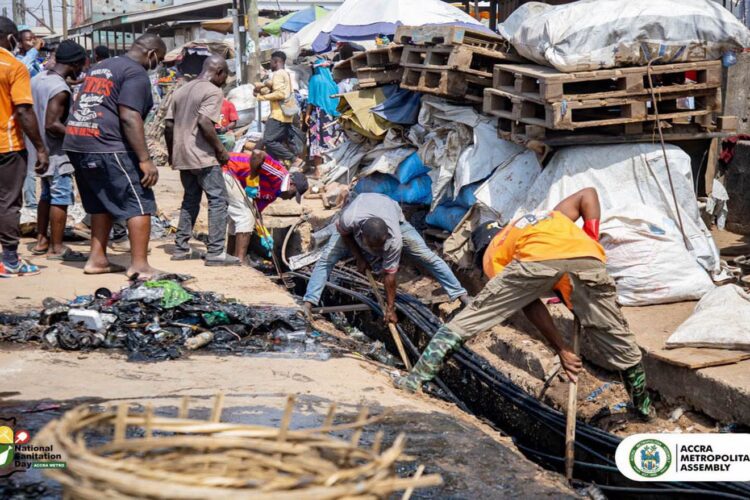
Poor sanitation and inadequate waste management are costing Ghana’s health system GHS5.58 billion annually in direct healthcare expenses, with preventable diseases such as malaria, cholera and typhoid continuing to place a heavy burden on the country’s health sector, a new study by the Institute of Statistical, Social and Economic Research (ISSER) has revealed.
The policy brief, titled “Waste or Wealth? The Economic Returns to Sanitation Investment in Ghana,” estimates that the country loses more than GHS6.2 billion each year through healthcare costs and lost productivity linked to poor sanitation.
According to the study, sanitation-related diseases account for 31.9 million lost work and school days and an estimated 107,222 premature deaths annually, highlighting the significant human and economic cost of inadequate waste management.
ISSER found that despite these staggering losses, Ghana spends only GHS180.2 million on waste management and sanitation across all Metropolitan, Municipal and District Assemblies, meaning the country spends about 30 times more treating the consequences of poor sanitation than preventing them.
The researchers say increasing investment in sanitation infrastructure and waste management could dramatically reduce disease incidence, cut healthcare costs and improve public health outcomes. They estimate that raising sanitation investment to the average level for lower-middle-income countries could reduce sanitation-related illnesses by 97.4% and lower associated deaths by 81%.
ISSER is urging policymakers to treat sanitation as a public health and economic priority by investing more in drainage systems, waste collection, faecal sludge management and disease-prevention infrastructure to reduce the burden of preventable illnesses on Ghana’s healthcare system.


0 Comments