
The National Health Insurance Authority (NHIA) has deepened stakeholder engagement in the Ahafo Region by holding a major town hall meeting at the Ahafo Regional Coordinating Council ahead of the rollout of the One-Time Attendance Code (OTAC) system.
The engagement, organized by a delegation from the NHIA Head Office together with the Ahafo Regional and District Offices, formed part of broader stakeholder consultations and sensitization activities preceding the implementation of the OTAC pilot in the region.
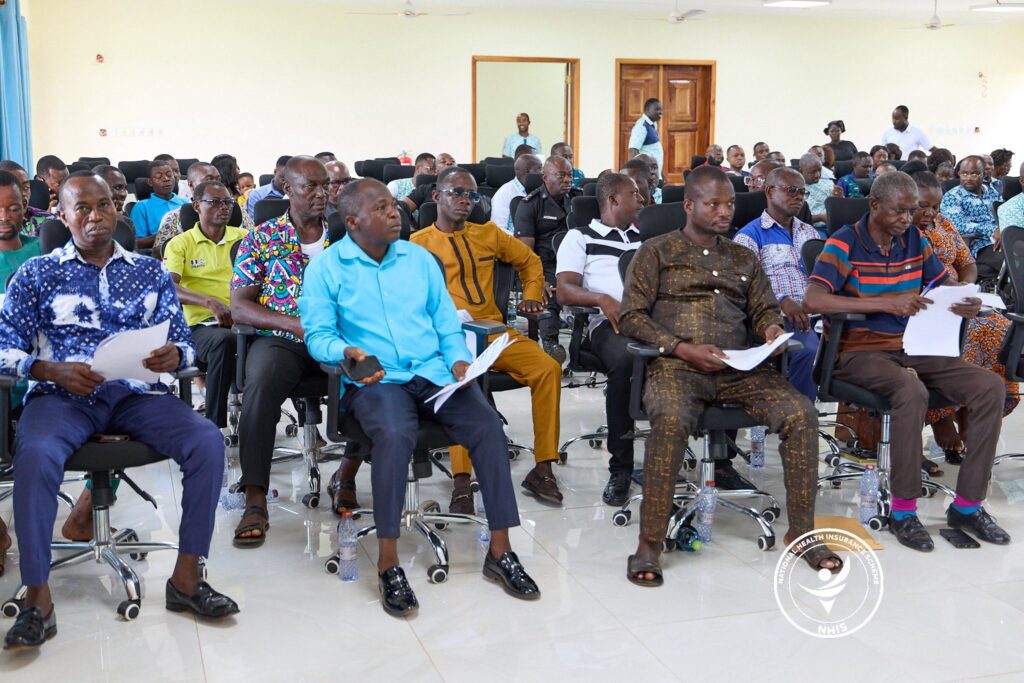
The well-attended forum brought together more than 200 participants drawn from various sectors of society, including Nananom of the Goaso Traditional Council, Assembly Members, the security services, traders, market women, drivers, farmers, organized labour, students, religious bodies, pressure groups, opinion leaders and other key stakeholders.
Representatives from the Ghana Police Service, Ghana Immigration Service, the Christian Council, Islamic Council, the Ghana National Association of Teachers, as well as students from Ahafoman Senior High School and Ahafo Nursing and Midwifery Training College, participated in the engagement.
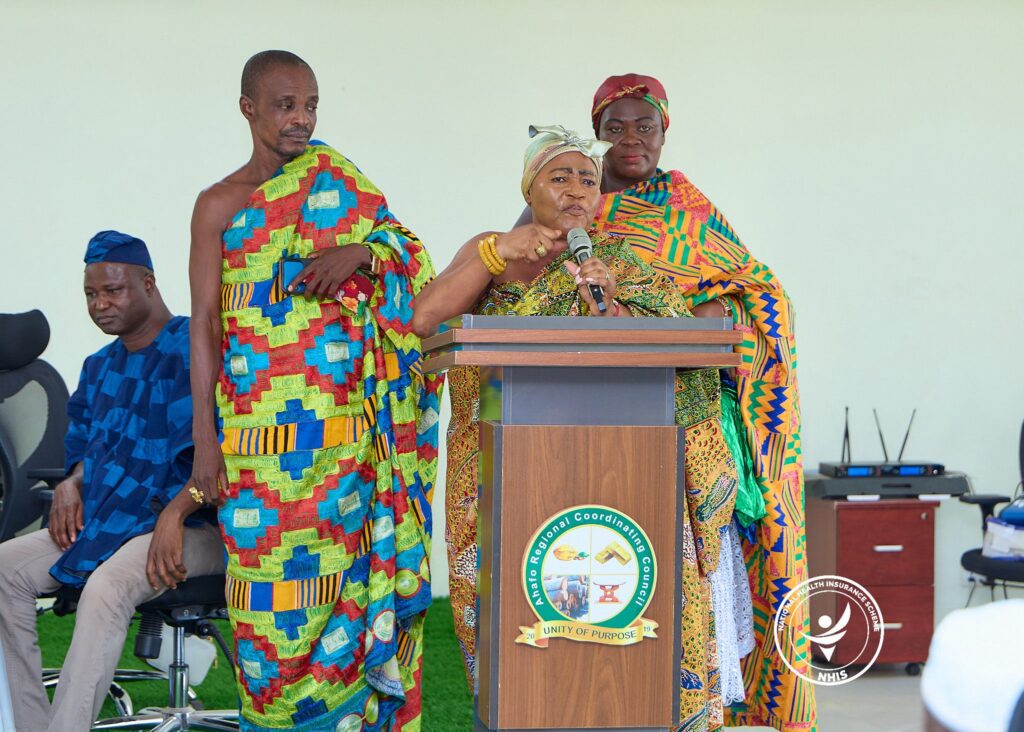
The forum was graced by the Queen Mother of the Goaso Traditional Council, Nana Afia Serwaa, who expressed excitement and admiration for the initiative, particularly the NHIA’s decision to pilot the OTAC system in the Ahafo Region.
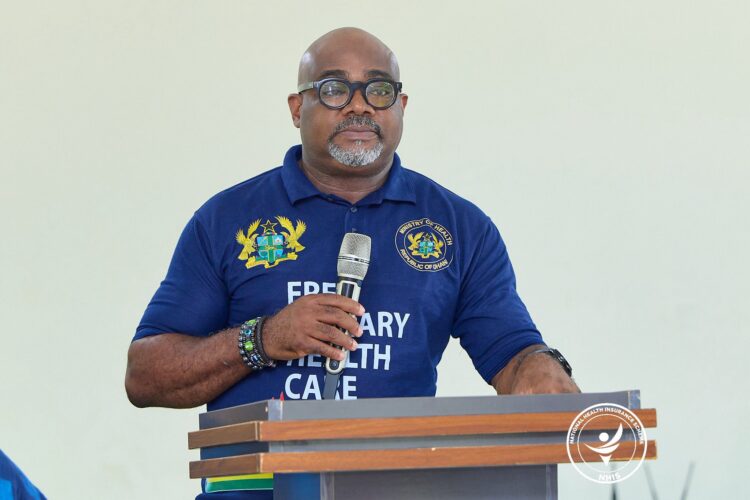
Addressing participants, the Director of Corporate Affairs, Oswald Essuah-Mensah, noted that the Free Primary Healthcare policy, launched by the President of the Republic of Ghana, John Dramani Mahama, on 15 April 2026, is anchored on three key pillars, being preventive and promotive interventions as well as curative care for basic illnesses at the lowest level of healthcare delivery facilities.
According to him, Non-Communicable Diseases (NCDs) such as diabetes, hypertension and stroke account for nearly 40 percent of causes of death in Ghana and continue to place a significant financial burden on the National Health Insurance Scheme.
He therefore encouraged participants to cultivate the habit of undergoing annual primary health screening under the Free Primary Healthcare policy. He mentioned essential screenings, including blood sugar checks, blood pressure monitoring, Body Mass Index (BMI) assessments, and mental health screenings.
Mr. Essuah-Mensah further stressed the need for intensified health promotion and public sensitization campaigns to create awareness and encourage lifestyle changes that can help prevent chronic diseases.
Speaking on the second intervention, the One-Time Attendance Code (OTAC), he explained that the system has been introduced to guarantee equitable access to the Free Primary Healthcare policy for the uninsured and seal financial leakages in the Scheme’s operations. The OTAC mechanism authenticates members’ attendance at health facilities and ensures financial discipline through strong verification capabilities, improving claims integrity and processes.

The Director of Management Information Systems, Mr. Joe Annor Darkwah, guided participants through generating an OTAC via mobile phone and demonstrated how the code is used to access healthcare services at health facilities.
He explained that individuals must obtain an OTAC before accessing Free Primary Healthcare or NHIS curative services. He added that the system has been designed to be user-friendly and accessible to all persons regardless of literacy level.
Mr. Annor-Darkwah indicated that the system allows third-party assistance in generating OTACs, either through relatives, NHIA staff stationed at facilities, or health facility staff. He further explained that each OTAC remains valid for 24 hours, after which a new code must be generated.
He also noted that parents or guardians can use their mobile phones to generate OTACs for children who do not own one but have NHIS membership numbers.
In response to participants’ questions, the Director of Operations, Mariam Musah, clarified that the Free Primary Healthcare policy covers basic curative services, such as malaria and upper respiratory tract infections.
She explained that repeated screenings or follow-up reviews may transition from Free Primary Healthcare services to curative services already covered under the NHIS. She further clarified that medical screening requests initiated by employers for prospective employees are not covered under the policy.
The Director of Membership and Regional Operations, Sebastien Alagpulinsa, urged participants to take advantage of the ongoing STORM initiative, which has waived processing and premium fees and eliminated the one-month waiting period for new NHIS registrations and renewals of memberships that have expired for more than 90 days.
He encouraged residents to register for or renew their memberships before the initiative expires on 31 May 2026.
Participants at the forum expressed appreciation for the initiatives and pledged their support towards the smooth implementation of the OTAC system in the region.
Welcoming the delegation on behalf of the Regional Minister, the Chief Director of the Ahafo Regional Coordinating Council, Joseph Frimpong Naayo expressed appreciation to the NHIA for selecting the region for the pilot implementation and assured the Authority of the full support of the Regional Minister and the Coordinating Council towards the successful implementation of the OTAC initiative.
The NHIA Regional Director, Mr. George Mawuli, thanked the participants for their participation and solicited their support for the implementation of a smooth programme.
The delegation from the NHIA was led by Oswald Essuah-Mensah and included Sebastien Alagpulinsa, Joe Annor-Darkwa, Mariam Musah, Faustina Dery, Hamdiya Amadu Yakubu, George Mawuli, Naphtali A. Kyei-Baffour, Mustapha Adams, Sylvester Pappoe, and Edwin Tetteh.
By: Naphtali A. Kyei-Baffour

0 Comments