
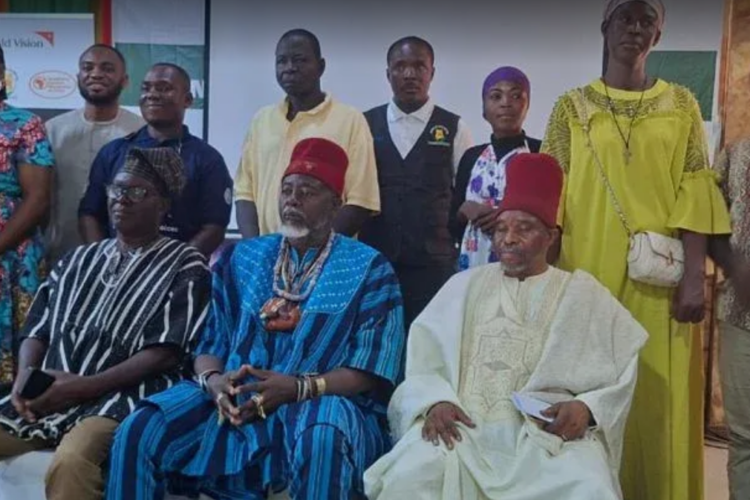
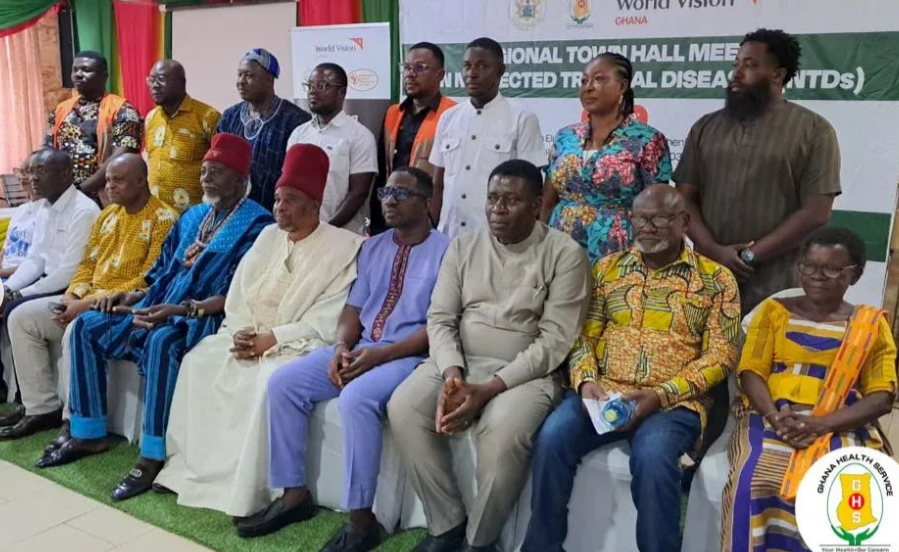
The Service, in collaboration with the Ministry of Health and support from World Vision, held a Town Hall Meeting in Upper East Region as part of ongoing efforts to eliminate Neglected Tropical Diseases (NTDs). The meeting, themed, “Sustaining Ghana’s Gains in Elimination of NTDs: Strengthening Sub-National Ownership for Universal Health Coverage and the WHO 2030 NTD Roadmap,” brought together key stakeholders to reaffirm commitment and set a way forward.
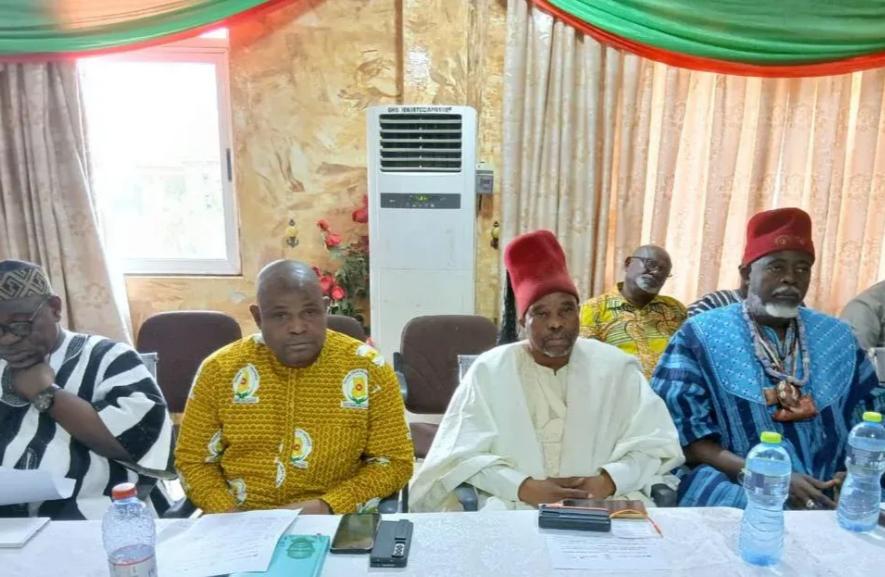
Delivering a keynote address on behalf of NTD Ambassador Rev. Dr. Joyce Aryee, the Programme Manager for the NTD Programme at the Ghana Health Service, Dr. Joseph Kwadwo Larbi Opare, highlighted Ghana’s remarkable progress in combating NTDs. He attributed these achievements to strong partnerships among government agencies, development partners and local communities. According to him, interventions such as mass drug administration, improved healthcare delivery and sustained public awareness campaigns have significantly reduced the burden of these diseases.
Dr. Opare further noted that regional town hall meetings have played a crucial role in translating policy into action at the community level. He pointed to tangible outcomes including the introduction of sanitation by-laws, increased community mobilization and the integration of NTD-related issues into local development planning. He stressed that while global frameworks guide efforts, real impact depends on local commitment and action.
Emphasizing the importance of the World Health Organization 2030 NTD Roadmap, Dr. Opare described it as not just a global strategy but a shared local responsibility. He called for stronger leadership at regional and district levels, better integration of NTD interventions into primary healthcare systems and enhanced cross-sector collaboration. He also underscored the urgent need for sustainable financing, highlighting the proposed End NTDs Fund as critical in the face of declining external support.
The Upper East Regional Director of the Ghana Health Service, Braimah Baba Abubakari, in his remarks, expressed concern over the continued prevalence of diseases such as Leprosy and Yaws in the region. He urged stakeholders to intensify collaborative efforts and promote inclusive strategies to address these persistent public health challenges. He encouraged all stakeholders to move forward with renewed determination, compassion and a shared vision of eliminating NTDs.
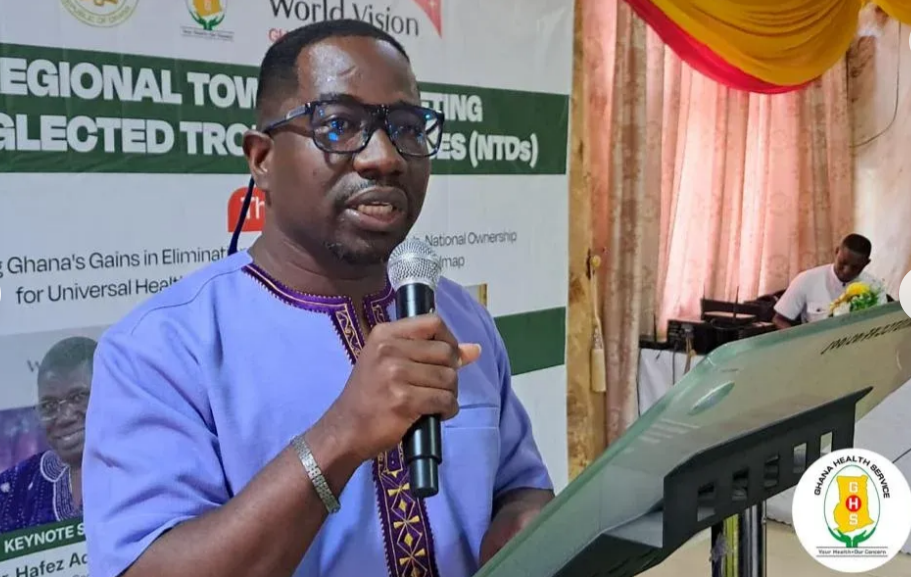
In a speech delivered on behalf of the Chair of the Intra-Country Coordinating Committee for NTDs, Hafez Adam Taher, Ag. Director of External Cooperation, Dr. Joseph Dodoo, outlined several government-led initiatives aimed at advancing progress. These include the introduction of the Free Primary Health Care Policy, which seeks to remove financial barriers to accessing preventive and early treatment services, expand access to essential medicines and strengthen the role of Community-based Health Planning and Services (CHPS) compounds as the first point of care for NTD interventions.
The meeting also featured the inauguration of the Regional Intra-Country Coordinating Committee for NTDs and the official outdooring of the Upper East Regional NTD Ambassador, Pe Dennis A.B.A Asagparee II. The traditional leader pledged his full support, alongside his team, to drive community engagement and achieve meaningful results in the fight against NTDs.
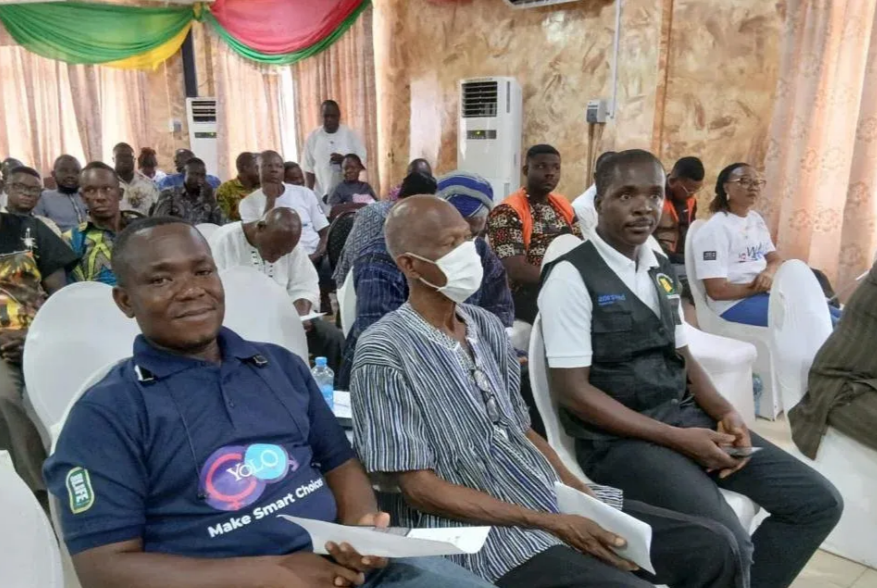
The engagement brought together regional leaders, civil society organizations, development partners and community representatives, reinforcing the importance of sub-national ownership in achieving Ghana’s goal of eliminating NTDs in line with the WHO 2030.
Source: GHS


0 Comments