
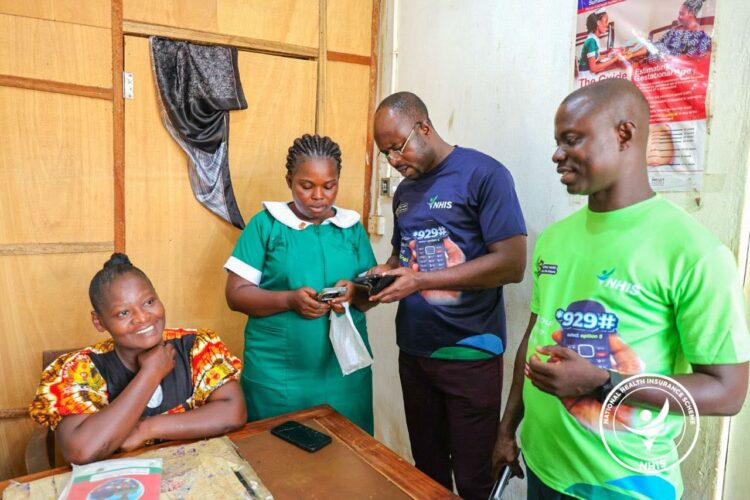
The Ahafo Regional Director of the National Health Insurance Authority (NHIA), Mr. George Mawuli has urged healthcare providers to view the National Health Insurance Scheme’s Electronic Facility Attendance Management System (NeHFAMS) not as a burden, but as a transformative solution capable of improving service delivery.
According to him, the digital system was introduced to streamline the NHIS claims process, ensuring that service providers are reimbursed accurately for services rendered while minimizing discrepancies between claims submitted and those approved for payment.
He noted that in the past, some claims were rejected because the Authority could not verify their authenticity.
Mr. Mawuli explained that the introduction of the One-Time Attendance Code (OTAC) under NeHFAMS now enables the NHIA to track when, where, and what type of care NHIS members receive at healthcare facilities. This, he said, enhances transparency and accountability in the system.
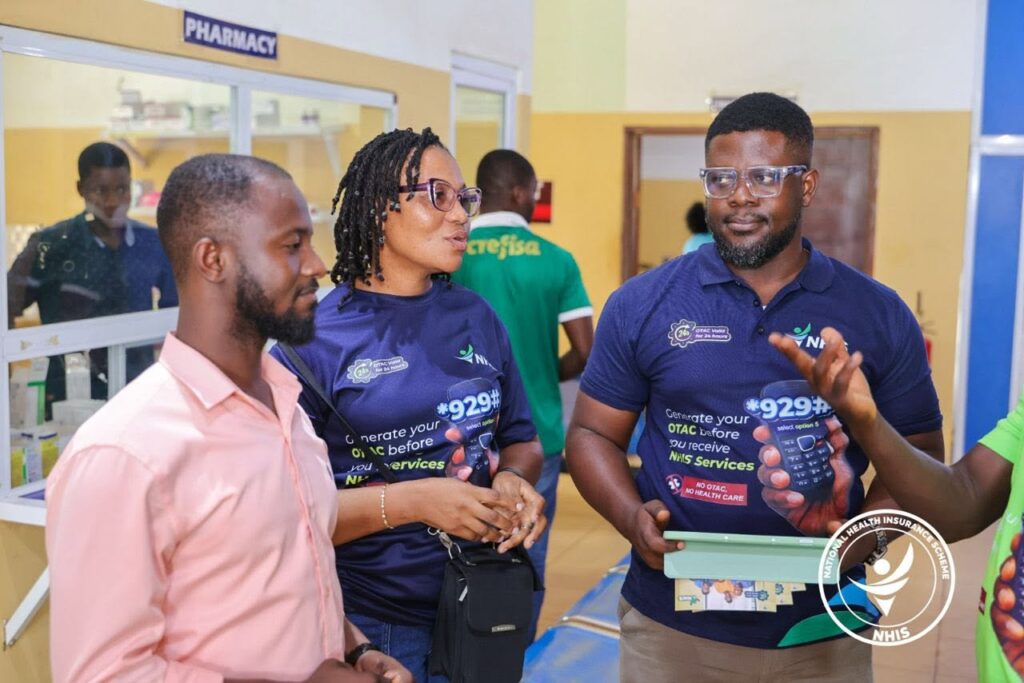
He, therefore, called on service providers to collaborate with the Authority in encouraging NHIS members to embrace the new system to ensure its smooth implementation.
The Regional Director made these remarks during a tour of selected healthcare facilities piloting the OTAC system in the Asunafo North Municipality of the Ahafo Region.
Accompanied by the Asunafo North NHIS District Manager, Mr. Kingsley Basubinin Yennu, he visited the Ayomso Health Centre, Cross Care Hospital, Akrodie Health Centre, and the Fawohoyeden CHPS compound, where he interacted with staff.
During the visit, some health workers expressed concerns about increased turnaround time, explaining that many NHIS members were not yet aware of the new requirement needed before accessing healthcare services.
They noted that this has occasionally prolonged the time spent attending to patients and appealed to the Authority to intensify public education on the system.
The staff also raised concerns that some clients could be denied healthcare services, as many of them either do not own mobile phones or no longer use the phone numbers they registered with under the scheme.
In response, Mr. Mawuli assured them that NHIS personnel would be available throughout the two-week pilot phase to assist members in updating their contact details.
He emphasized that the system is permanent and encouraged households to have access to at least one reliable mobile phone that can be used to generate the OTAC when needed.


0 Comments