
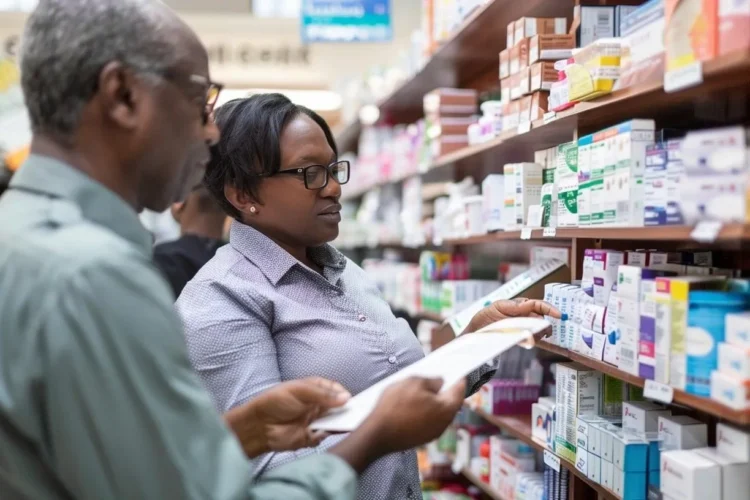
Ghana’s consumers continue to grapple with high medicine prices even though key economic pressures such as the depreciation of the cedi against the dollar and the disruptions of the COVID-19 pandemic have eased.
Many Ghanaians are asking why essential drugs remain costly despite improvements in foreign exchange and supply chain stability.
Pharmacists and pharmacy assistants interviewed for this report paint a picture of an industry still struggling with cost structures, brand perceptions and consumer behaviour that keep prices high.
Pharmaceutical products have historically been among the goods most affected by foreign exchange movements because more than 70 percent of medicines sold locally are imported.
During the height of the COVID-19 pandemic, the cedi lost significant value against the dollar, pushing import costs higher and translating into steeper prices for end consumers. But with the cedi now trading at levels significantly stronger than its pandemic peak and global supply disruptions largely resolved, there are still no noticeable declines in the price of many commonly used drugs.

A walk through community pharmacies in Accra reveals that the cost of treatment remains a burden on households, particularly for chronic conditions requiring monthly medication. At a pharmacy in East Legon, a customer recently walked away after seeing the price of a single drug for hypertension quoted at more than 300 Ghana cedis for a one-month supply.
Vivian Enam Holonyo, Pharmacy Assistant at Unicom Chemist Ltd explained that part of the price variation stems from the continued preference for original, branded drugs over generic alternatives. “Some medication that before people used most and the prices were very low, those were generic versions.
But when they are original, imported brands, they are very expensive,” she said. Holonyo added that pharmacists often show customers both the original and generic options, giving consumers information and choice. “If you want the generic one, I will give it to you, but if you want the original one, I will also give it to you,” she said.
Holonyo said there is a persistent belief among some customers that the original brand is more effective and faster acting than the generic equivalent. “In terms of effectiveness and lifespan, the original one would take a short time to heal better than generic.
The generic may take longer to work,” she said, describing a perception that influences purchasing decisions. According to her, this belief leads some patients to choose more expensive medicines, even if a cheaper alternative exists.

The result is that many patients simply cannot afford the original brands and walk away when prices are quoted. “We get it a lot. The market women around here cannot afford 650 Ghana cedis a month on one medication and they do not come back,” she said. Holonyo added that insurance sometimes absorbs some of the cost for customers, but this is not universal, leaving many to pay out of pocket.
Another pharmacist at Unicom Chemist Ltd., Donna Mould, emphasised that pricing patterns have deep roots beyond recent macroeconomic trends.
“Formerly COVID and the dollar price became one of the factors that drugs were expensive because we do not manufacture most of them locally. Most are imported,” she said. “So now the dollar is stabilised and COVID is something of the past, but drugs are still very expensive.”
Mould said customers often struggle to reconcile the cost of essential treatments with their incomes. She described a situation where a family buying medications for an elderly parent would spend in a year an amount that could otherwise have funded schooling or housing improvements. “When you look at the amount, multiplied by 12 months, a year, you can use it for other important things,” she said.
Mould also pointed to brand variation as a major determinant of price. “It depends on brand and strength,” she said. “If you are buying a generic, it might be five thousand cedis, but a branded equivalent could be much higher.” Pharmacists she said explain these differences to customers so they can make informed decisions. “We show them the difference and explain what the medication does and why it costs what it does,” she said.

Experts in healthcare economics say that the sustained high prices of medicines are driven by a combination of structural and market factors. Imported drugs attract costs related to freight, insurance, regulatory compliance and currency conversion. Ghana currently lacks large-scale domestic pharmaceutical manufacturing capacity, meaning most finished products must be brought in from abroad, often in small volumes that reduce bargaining power with suppliers.
Health policy analysts note that while generic substitution can lower costs, many consumers distrust generic drugs, believing them to be inferior despite evidence from the World Health Organization that properly regulated generics are therapeutically equivalent to branded products. This perception fuels demand for higher-priced originals, keeping overall market prices elevated.
Consumer advocacy groups also point to the need for stronger regulation and price monitoring. Ghana’s Food and Drugs Authority regulates drug registrations and safety, but there is limited oversight of retail pricing.
Without mechanisms to control mark-ups or increase transparency, pharmacies may price products in line with what the market will bear rather than at cost-plus levels that reflect actual supply costs.

For many Ghanaians, the result is a daily choice between essential healthcare and other basic needs. As long as imported medicines remain the default and consumer trust in generics remains low, prices are likely to stay high, even in the absence of earlier economic shocks.
But pharmacists like Holonyo and Mould maintain that understanding product differences and making informed choices can help consumers manage costs. Whether broader structural reforms will follow remains a question for policymakers, health professionals and the public alike.
Effective solutions will require coordinated action across government, industry and civil society to improve local manufacturing, enhance regulatory oversight and build public confidence in affordable treatment options.
By Makida El Husseini/ HighStreetJournal



0 Comments