
For the past few days, I have been completely torn.
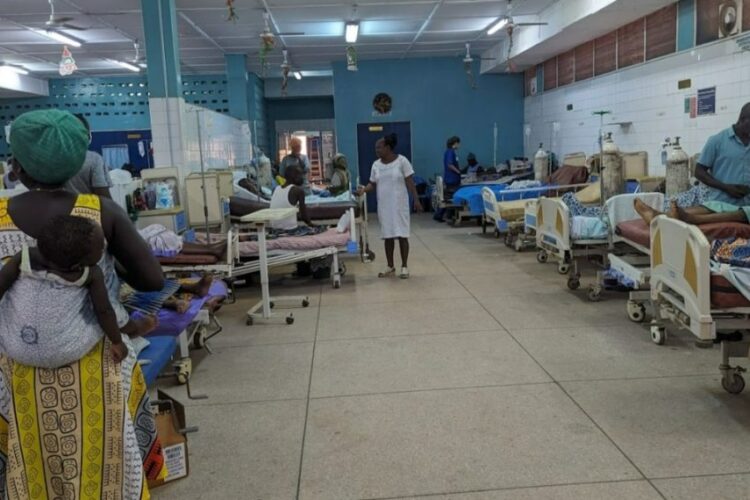
Torn because I know how broken our healthcare system is. I know how thinly stretched healthcare workers are. I know what it means to work in wards without enough staff, without enough beds, without enough supplies. I know what it means to improvise, to negotiate with scarcity, to carry moral distress home at night.
But I am also torn because no matter how broken a system is, compassion does not require a fully functioning system.
It does not require a policy.
It does not require a budget line.
It does not require a hospital bed.
It requires a human being to look at another human being and say, “Let me at least try.”
In the midst of the recent national outrage, one patient’s name has dominated the news. And rightly so ; no one should be turned away without assessment. No one should die from something potentially survivable because the doors did not open.
But what troubles me even more is this: for every name that makes the headlines, there are countless others whose names we will never know.
That same week, I was told of a security guard, someone dear to someone dear to me, who was stabbed. He was taken first to Achimota Hospital. He was not assessed. Bleeding was not stopped. An IV was not secured. He was referred on. At 37, the same thing happened. He died before reaching Korle Bu.
He was a security guard.
No trending hashtag.
No national outrage.
No panel discussions.
Just another quiet death.
The system is broken , yes. Underfunded. Overburdened. Structurally strained. Healthcare workers operate daily under immense pressure and moral injury. When you work long enough in scarcity, something hardens. You ration not just supplies, but emotional energy.
But scarcity explains behaviour; it does not excuse indifference.
Basic triage does not require a bed.
Applying pressure to stop bleeding does not require folders.
Starting an IV does not require systemic reform.
It requires presence.
It requires instinct.
It requires compassion.
And I say this not as someone standing outside the system, but as someone deeply within it. I have fought for blood products. I have waited on delayed histopathology reports. I have watched parents sell land to afford treatment. I know the fractures intimately.
Which is why this hurts so much.
I am even more broken because I fear this moment will change nothing. The government who bears responsibility for ensuring a functional health system will likely escape accountability. Healthcare workers will be insulted and vilified. And the ordinary Ghanaian, the unnamed Ghanaian, will continue to die in the gaps between institutions.
That is the heaviest part.
We are stuck between structural failure and individual responsibility. Between policy neglect and professional duty. Between outrage and exhaustion.
And yet, even in a broken system, culture still matters.
Compassion is culture.
Responsiveness is culture.
The decision to at least assess is culture.
Systems reform takes time. Budgets take negotiation. Infrastructure takes capital. But culture shifts begin with individuals refusing to normalize indifference.
I do not pretend that this is easy. Moral injury is real. Burnout is real. Fatigue is real. But if we lose compassion entirely, then we have lost more than beds and equipment. We have lost the very reason medicine exists.
I remain torn.
Torn between defending colleagues who are doing their best in impossible circumstances.
Torn between demanding accountability from leaders who underfund and underprioritize healthcare.
Torn between understanding systemic failure and refusing to excuse preventable indifference.
But perhaps being torn is not weakness.
Perhaps it is evidence that our moral compass is still intact.
And perhaps that , however small is where change begins.
By: Ella Amoako, a Paediatric Oncologist at Cape Coast Regional Hospital



0 Comments