
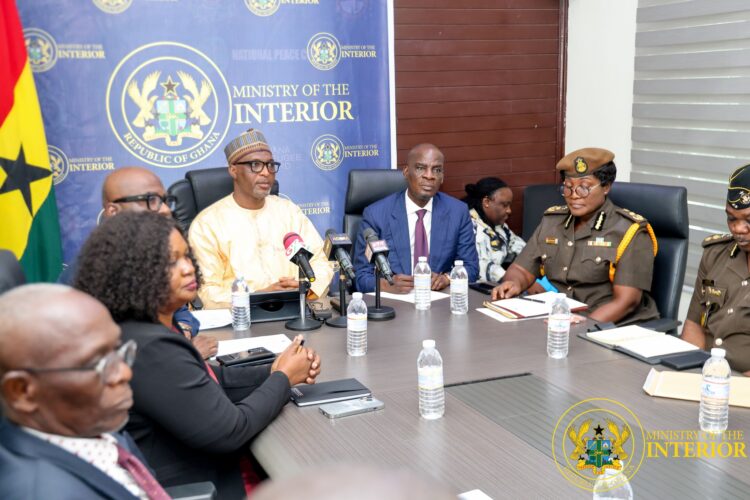
The Government has taken steps to boost local production of sanitary pads for schools, following the signing of a Memorandum of Understanding (MoU) between the Ministries of the Interior and Education that assigns a key production role to the Ghana Prisons Service.
Under the agreement, the Ghana Prisons Service will produce and supply at least 30 per cent of sanitary pads required for schools across the country.
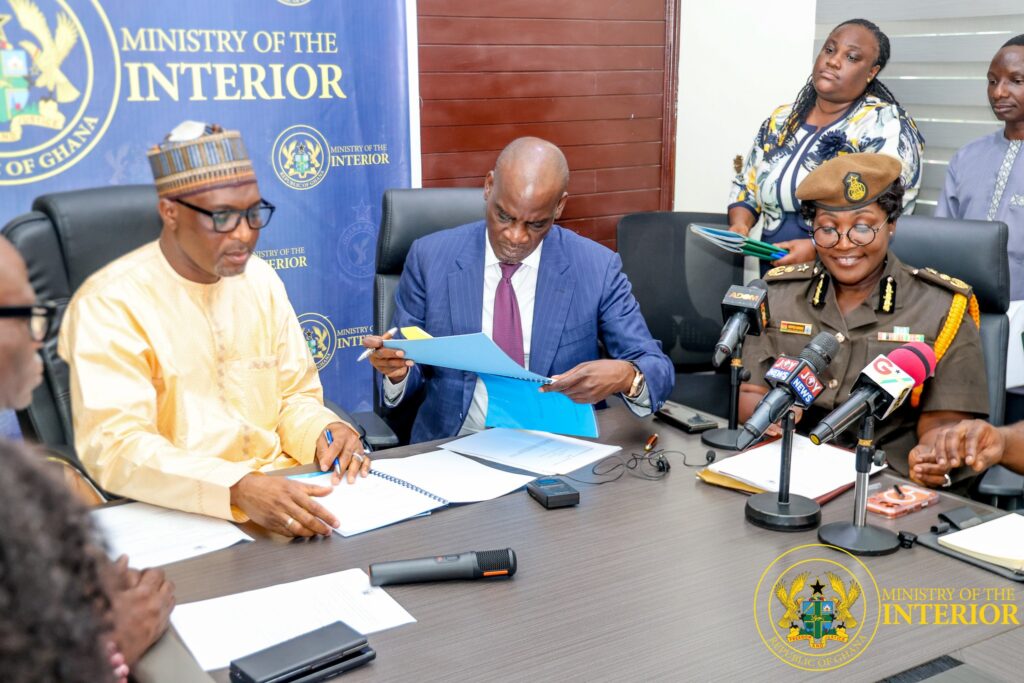
The initiative also covers the production of school uniforms and furniture, but places particular emphasis on improving access to essential sanitary products for schoolgirls through domestic manufacturing.
The MoU signing ceremony, held at the Ministry of the Interior in Accra, forms part of government’s broader agenda to strengthen local production, ensure value for money in public procurement, and support social interventions within the education sector.
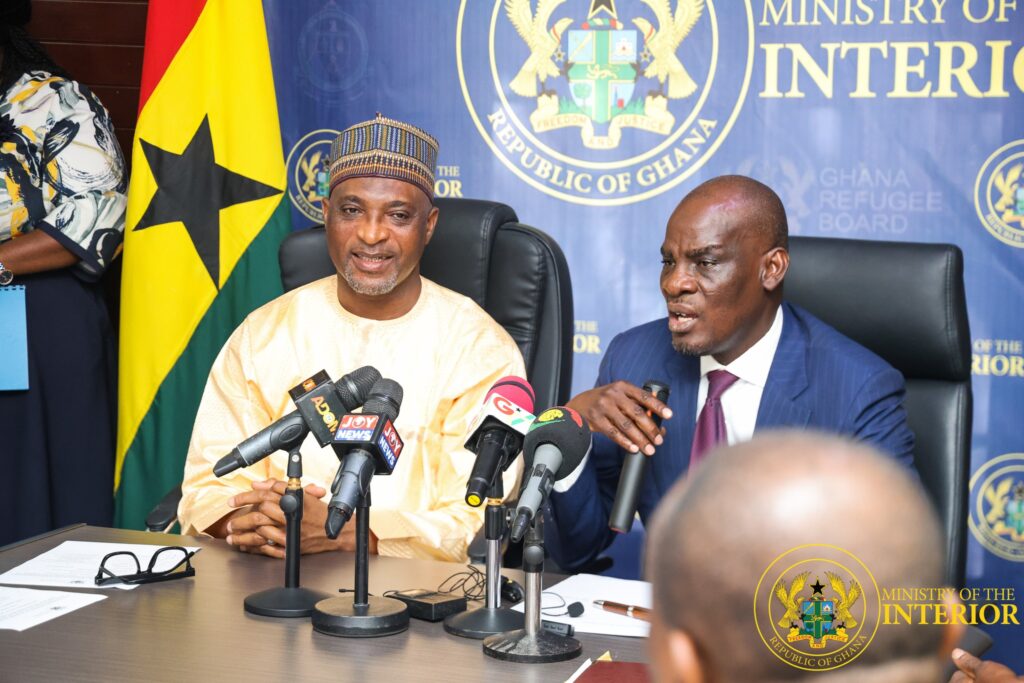
Speaking at the ceremony, the Minister for the Interior, Muntaka Mohammed-Mubarak, said the initiative reflects a deliberate policy decision to anchor the supply of critical educational inputs within state institutions.
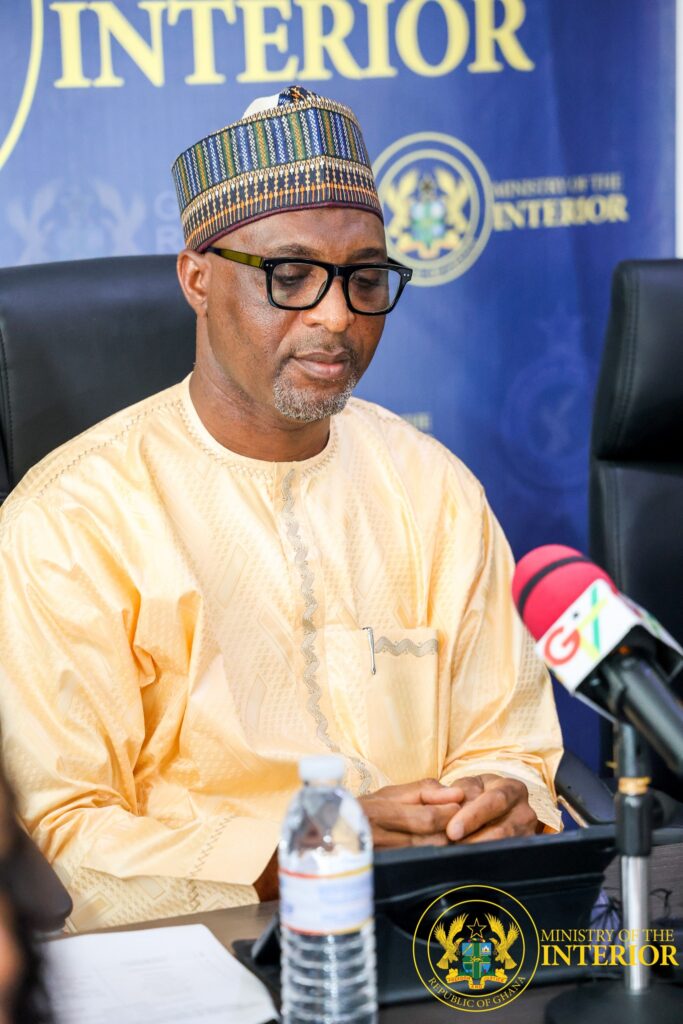
He noted that producing sanitary pads locally would help ensure consistent supply, reduce costs, and enhance transparency in procurement, while also supporting inmate rehabilitation.
According to the Interior Minister, the initiative is expected to deliver multiple benefits, including skills training for inmates, income generation, and reduced recidivism.
He announced the formation of a five-member implementation committee to oversee the effective rollout of the agreement and commended the Ghana Prisons Service for expanding its role in national development.
The Minister for Education, Haruna Iddrisu, said the MoU repositions the Ghana Prisons Service as an active participant in the education value chain, particularly in the production of sanitary pads for schools.
He stressed the importance of structured skills acquisition to prevent inmates from relapsing into crime after release.
He added that the initiative adopts a value-chain approach centred on indigenous production, with manufacturing activities to be located within selected prison facilities.
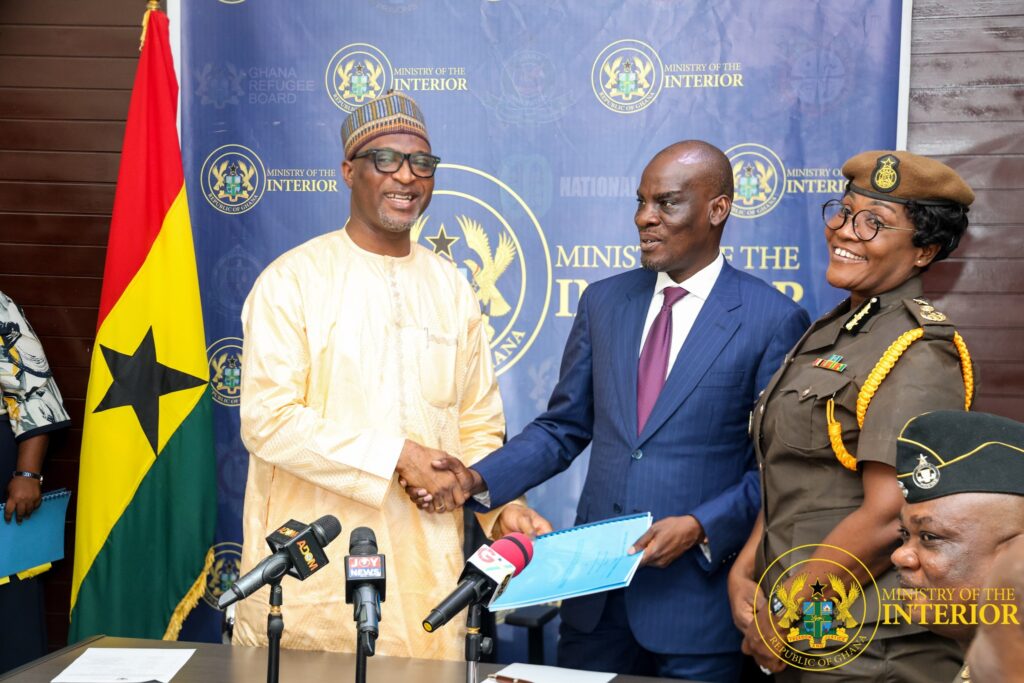
The Director-General of the Ghana Prisons Service, Mrs. Patience Baffoe-Bonnie, described the initiative as a transformative step for the Service.
She said the programme would help equip inmates with practical skills while contributing directly to national needs, including the provision of sanitary pads to support girls’ education.
She noted that the long-term objective is to improve public safety by breaking the cycle of recidivism and enabling inmates to reintegrate into society as productive, law-abiding citizens.

0 Comments