
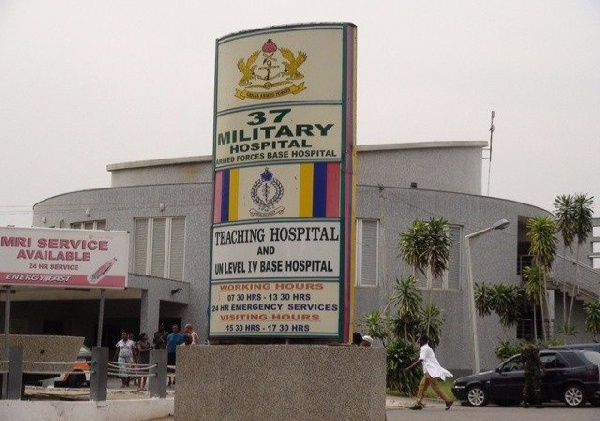
For decades, the 37 Military Hospital has stood as one of Ghana’s most critical healthcare institutions, serving both military personnel and civilians. Yet behind its familiar name lies a wartime history that connects Ghana to the Second World War and explains why the facility is known simply as “37.”
The hospital was built on July 4, 1941, when Ghana was still the Gold Coast under British colonial rule. It was established to cater for casualties from the Second World War and was the 37th military hospital set up in the then Gold Coast, giving rise to its original name, “No. 37 General Hospital.” The number was not symbolic or geographical; it simply reflected its order of establishment.
Accra was selected because of its strategic coastal location, making it ideal for supporting British military operations across West Africa. The facility was constructed under British Army supervision, with General George Giffard, the British General Officer Commanding in West Africa at the time, playing a key role in its establishment.
In 1956, shortly before Ghana gained independence, the hospital became known as the 37 Military Hospital of the Gold Coast. After independence in 1957, the name was retained as 37 Military Hospital, preserving its historical identity.
From its humble beginnings with 29 wards, the hospital has grown into one of Ghana’s most important health institutions, now boasting about 400 beds and several specialised medical units. Ghana has been the principal beneficiary of the facility, which has consistently catered for the healthcare needs of military personnel, their families, support staff, and civilians from all walks of life.
The hospital has also distinguished itself by remaining operational during periods when major public hospitals go on strike. Today, nearly 70 per cent of its in-patients are civilians, highlighting its vital role beyond the military community.
Now serving as the government’s primary emergency response health facility, the 37 Military Hospital becomes the centre of action during major national disasters.
Among the most notable emergencies it has handled are the May 9, 2001 Accra Sports Stadium disaster, which claimed more than 120 lives, and the June 3, 2015 fire and flood disaster, which resulted in the deaths of over 150 people.
The hospital has also earned international recognition as a United Nations Level IV Military Medical Facility, providing advanced healthcare services to UN peacekeepers and civilian staff deployed in conflict areas across the sub-region.
As it marks 85 years of service in July 2026, the 37 Military Hospital stands not merely as a medical institution, but as a living monument to Ghana’s wartime past, national resilience, and enduring commitment to saving lives.


0 Comments