
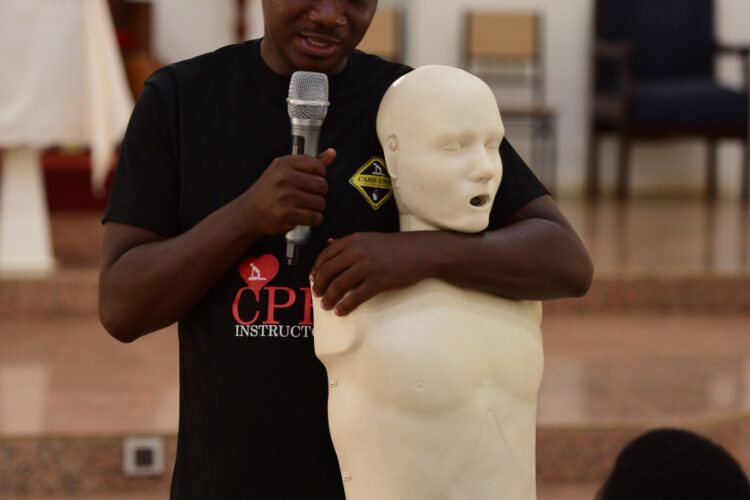
A health and safety training programme focused on first aid, CPR and emergency response was held on Saturday, 17 January 2026, at St John of God, Amrahia, as part of efforts to equip the public—especially children—with essential lifesaving skills.
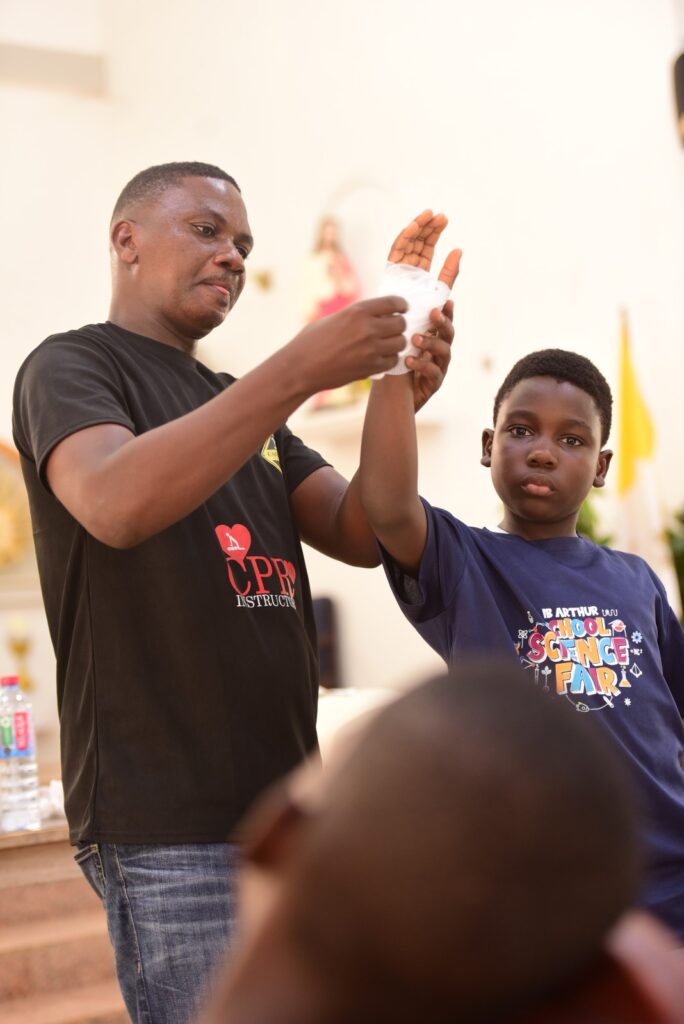
The training was led by Ebenezer Attoh, Health and Safety Manager and First Aid & CPR Instructor at Care Unit – First Aid Services, an organisation that provides first aid training, AED instruction, Advanced Cardiac Life Support (ACLS) services and first aid equipment.
Speaking during the session, Mr Attoh explained that the programme was designed as an introduction to first aid, with a strong emphasis on educating children on how to respond during medical emergencies at home or in public spaces.
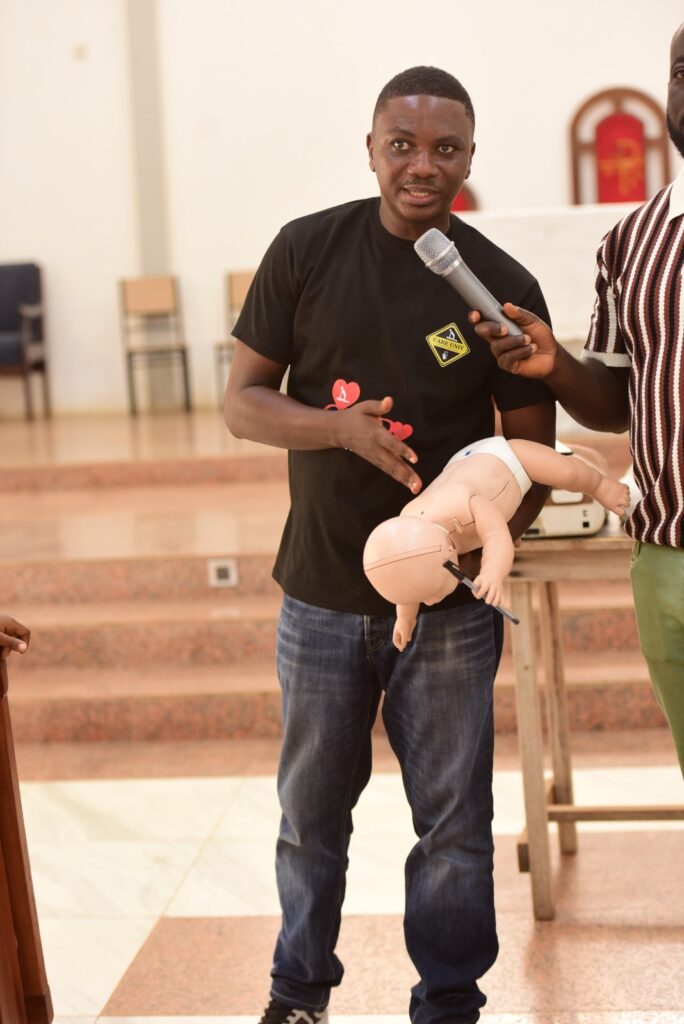
“If something happens to an adult and a child is present, what will the child do? Can they call for help or explain the situation to emergency services?” he said.
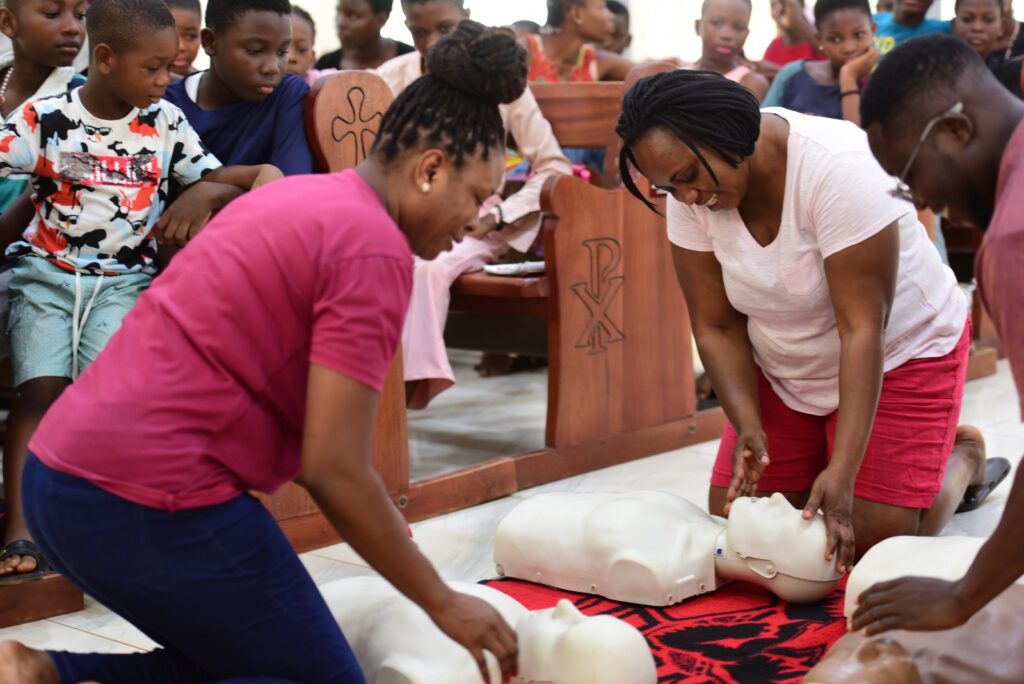
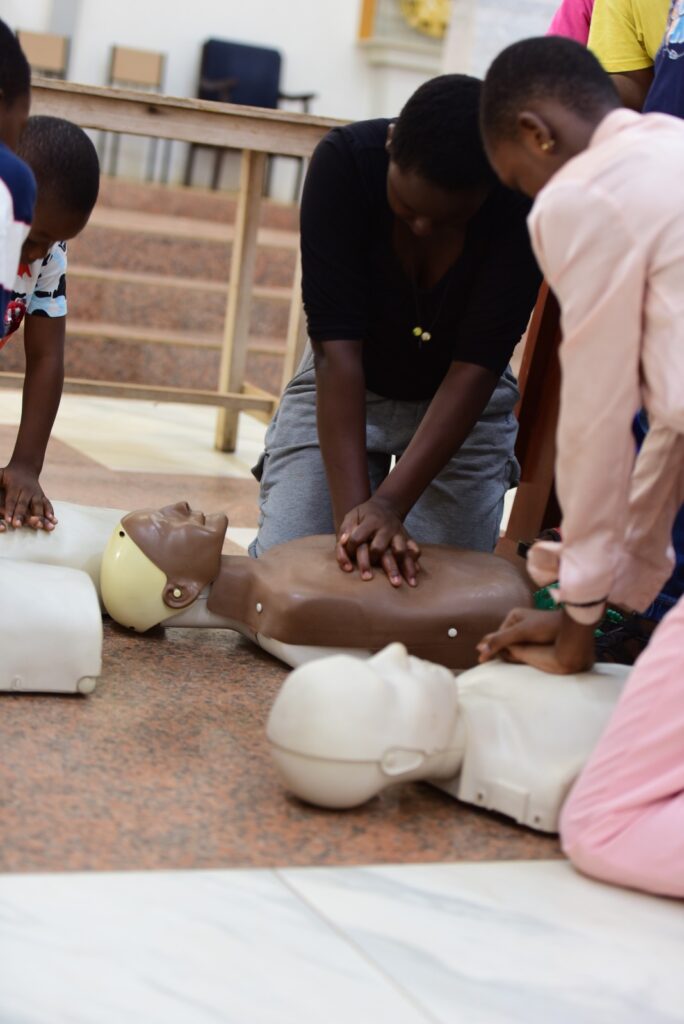
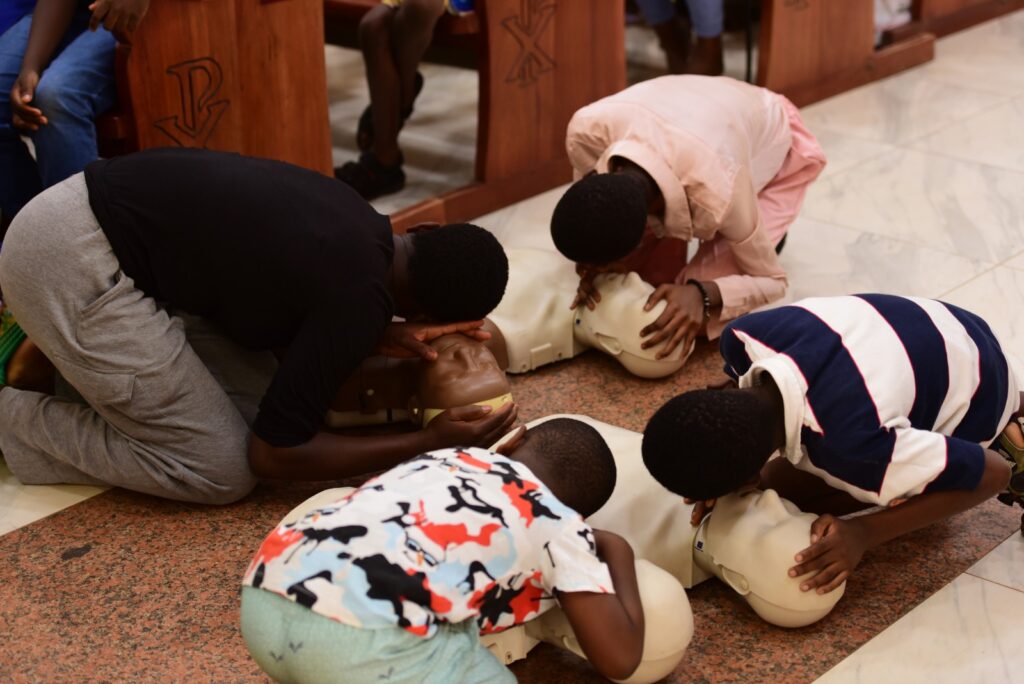
Participants were taken through the basics of Cardiopulmonary Resuscitation (CPR) and Basic Life Support (BLS).
Mr Attoh explained that CPR is performed when a person has no breathing and no pulse, and clarified that it is required not only in cases of cardiac arrest but also during incidents such as drowning, choking, and other medical emergencies.
The training also covered how to manage fainting (hypoxia), choking incidents, bleeding—including nosebleeds—and basic wound care. Participants were additionally introduced to signs of internal bleeding and appropriate first response actions.
During an interactive discussion, Mr Attoh cautioned against common but unsafe practices such as using hot water on wounds and applying gentian violet, which he said is no longer recommended due to health risks and the availability of safer alternatives.
He explained that hot water can damage surrounding skin tissue, slow the healing process and deprive the affected area of oxygen needed for cell regeneration.
On gentian violet, he noted that several countries have restricted or banned its use due to concerns about its potential carcinogenic effects, urging stronger public education and regulatory enforcement in Ghana.
Mr Attoh called for first aid education to be incorporated into Ghana’s school curriculum from an early stage, arguing that widespread first aid knowledge could significantly reduce pressure on hospitals over time by enabling early and appropriate response to emergencies.
He encouraged the public to take advantage of such training opportunities, noting that the skills acquired could prove critical in saving lives.



0 Comments