
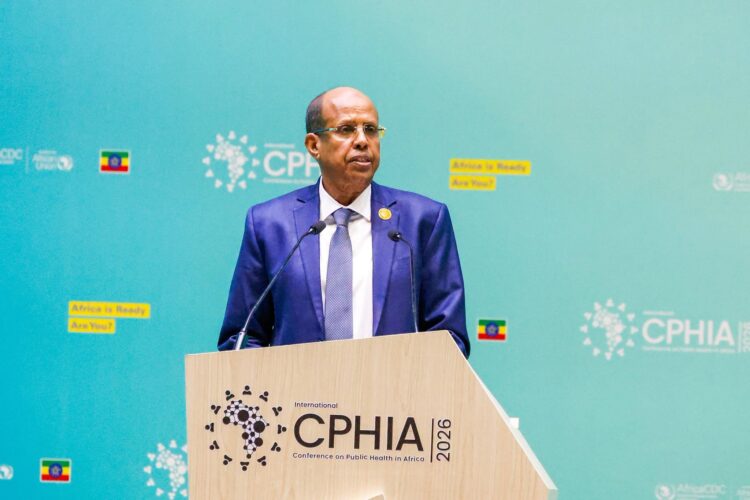
Africa must reduce its dependence on imported medicines, vaccines and essential medical supplies and strengthen local production to protect the continent against future health emergencies, African Union Commission Chairperson Mahmoud Ali Youssouf has said.
He said recent public health emergencies and significant cuts in international health financing had exposed the risks of relying heavily on external sources to sustain Africa’s health systems.
Speaking at the fifth International Conference on Public Health in Africa (CPHIA 2026) in Addis Ababa, Ethiopia, Mr Youssouf called for greater domestic investment, stronger pharmaceutical manufacturing capacity and improved preparedness to secure the continent’s health future.
He said Africa must move beyond policy declarations and translate its health sovereignty commitments into measurable results that improve access to quality and affordable healthcare.
Mr Youssouf identified sustainable domestic health financing, local production and innovation, emergency preparedness, and accountability as key priorities for achieving health sovereignty.
He urged African governments to renew their commitment to the Abuja Declaration target of allocating at least 15 per cent of national budgets to health, while ensuring greater efficiency and accountability in public spending.
He also called for increased investment in pharmaceutical and vaccine manufacturing, medical supplies, research and innovation. He said strengthening the African Medicines Agency, using the African Continental Free Trade Area (AfCFTA) and expanding pooled procurement could help build competitive health industries across the continent.
On emergency preparedness, he stressed the need to strengthen disease surveillance, early-warning systems, national health infrastructure and the health workforce, alongside regional cooperation.
The AU Commission Chairperson said the African Health Security and Sovereignty Agenda, adopted in February 2026, and the Accra Declaration to 2030, adopted in July 2026, provided an important framework for advancing the continent’s health priorities.
However, he said the impact of these commitments must ultimately be measured by improvements in access to essential vaccines, maternal healthcare and timely, affordable medical treatment.
Mr Youssouf further noted that health sovereignty required investment beyond the health sector, including safe water and sanitation, food security, education and inclusive economic development.
He called for international partnerships that support Africa’s priorities and strengthen its universities, research institutions, laboratories and scientific capabilities, stressing that external support must complement rather than replace African-led efforts.


0 Comments