
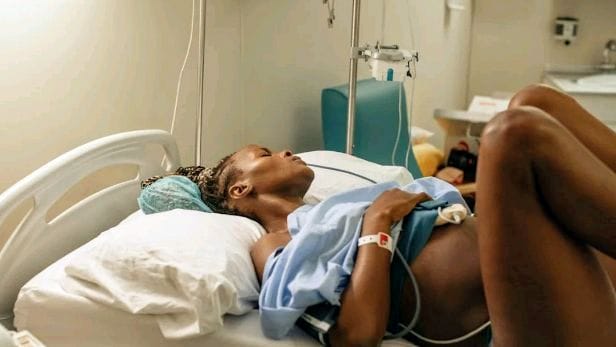
Ama was only twenty-three when the village began calling her “Obaa Dofo”—the woman who smiled at everyone. She lived in Asuogyaman, a small riverside community where mornings smelled of wood smoke and boiled cassava, and evenings echoed with children’s laughter. When Ama became pregnant with her first child, the whole compound rejoiced. But joy, as the village would soon learn, does not always walk hand in hand with safety.
When Warning Signs Are Ignored
In her seventh month, Ama’s feet began to swell. The elders said it was normal—“all pregnant women swell.” Then came the headaches, pounding like kete drums in her head. One night, she collapsed, her body shaking violently. At the district hospital, the nurse whispered the word eclampsia, her voice heavy with worry. Ama survived the night, but the danger had only begun.
Rain, Delay, and the Fight for Life
Labor came suddenly during a heavy rainstorm. The roads were muddy, the tricycle unavailable. Ama labored at home for too long. When help finally came, the baby refused to descend—obstructed labor, the midwife said later. By the time she reached the hospital, Ama had lost so much blood that her wrapper was soaked deep red. Hemorrhage does not wait for paperwork. There was no blood in the bank.
Other Beds, Other Silent Struggles
As nurses fought to save Ama, infection crept in quietly. Fever rose, and sepsis wrapped itself around her weakened body like harmattan dust—silent but deadly. Nearby lay Efua, a market woman who had tried to end an unwanted pregnancy in secret. Fear kept her away from the hospital until it was too late. In another corner was Akosua, thin and pale, her pregnancy unmasking a hidden heart condition worsened by years of untreated anemia.
A Morning That Changed the Village
When the sun rose, some babies cried. Some mothers did not. Reports were written, voices lowered, and the village mourned. Ama’s story became one more reminder shared in antenatal clinics and community durbars—that pregnancy is not only a time of joy, but a journey that demands care, access, knowledge, and timely help. Because in Ghana, as everywhere else, no woman should give life and lose her own.


0 Comments