
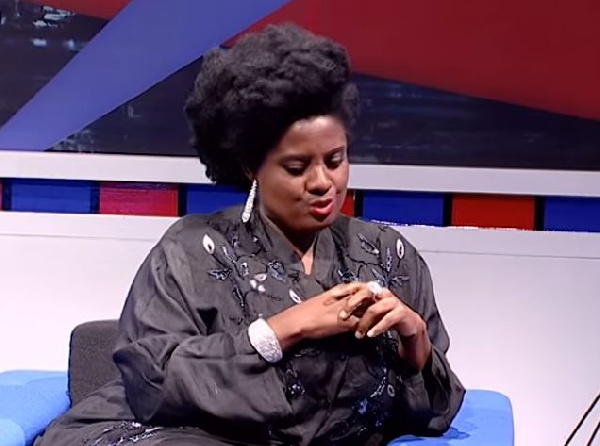
What Franklin Cudjoe did on The KSM Show was not an act of weakness; it was an act of moral courage. To speak openly about living with Parkinson’s disease in a society that still confuses illness with incapacity is to reclaim one’s humanity from cruelty masquerading as “concern.” Those who insist that he should withdraw from public life, retreat from the media, or silence himself to make others comfortable are not protecting dignity; they are denying it.
No illness, visible or invisible, strips a human being of their right to presence, voice, ambition, or joy. To suggest that Franklin Cudjoe should “keep off the media” is to imply that life must be paused until suffering ends, that contribution is conditional upon physical perfection, and that public space belongs only to the unscarred. That logic is not compassion; it is discrimination dressed in polite language.
His boldness to continue living fully, to think, speak, laugh, analyse, appear, and participate, is precisely what should be celebrated. Life does not end at diagnosis. Identity is not cancelled by disease. The human spirit is not subject to medical permission. By choosing visibility over silence, Franklin Cudjoe affirms a profound truth: dignity is not granted by public approval; it is inherent.
This moment exposes a fragile and uncomfortable moral reality in our society. We claim empathy, yet ration it. We applaud resilience in theory, but recoil from its real-life expression. We say “be strong,” mocking strength when it shows in a trembling body or an unsteady voice. Our morality is often performative, loud in sympathy, shallow in practice.
Even more troubling is the hierarchy of compassion we have constructed. Society is quick to offer love, accommodation, and public solidarity to those with visible physical conditions, wheelchairs, casts, scars we can see and easily categorise. But when suffering is psychological, neurological, emotional, or socially induced, our empathy evaporates, and judgment takes its place. Depression is dismissed as weakness. Anxiety is ridiculed as fragility. Neurological disorders are treated as an embarrassment. Trauma is interrogated rather than held. The unseen becomes the unbelievable.
There is also a quieter, crueller category of suffering we rarely acknowledge: social disability born of shame and humiliation. These are the wounds inflicted by workplace hazards, public scandals, political sacrifices, economic collapses, or collective blame. People who are injured not only in body or mind, but in reputation, confidence, and belonging. Their pain is deepened by whispers, stares, exclusion, and the unspoken accusation that they somehow “deserve” their isolation. This too is disability, one that erodes the soul while leaving no bandage to signal distress.
In truth, every human being remains vulnerable. Not hypothetically but inevitably. To illness. To accident. To loss. To error. To time. To systems that fail. To bodies that betray us. To minds that buckle under pressure. Vulnerability is not an exception to the human condition; it is the condition itself.
What we owe one another, therefore, is not pity, nor silence, nor exile, but humanity. Empathy must be more than a slogan; it must be our anthem. An empathy that allows people to remain visible. An empathy that does not demand withdrawal as the price of compassion. An empathy that understands that accommodation is not charity and presence is not provocation.
Franklin Cudjoe’s choice to live openly is a mirror held up to us all. The question is not whether he should be seen. The question is whether we, as a society, are mature enough to see him and still honour his full humanity.
Because in the end, the measure of a society is not how it treats the strong when they are thriving, but how it stands with the vulnerable when they refuse to disappear.
By Victoria Hamah



0 Comments