
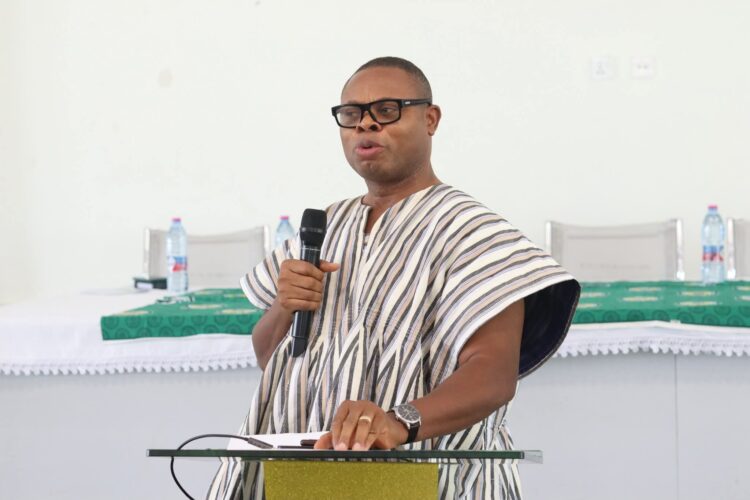
Founder and President of policy think tank IMANI Africa, Franklin Cudjoe, has defended his mental capacity and political positions following public commentary about his health, insisting that his medical condition has not impaired his ability to think clearly or engage in public debate.
In a strongly worded social media post on Sunday, 18 January, Mr Cudjoe rejected suggestions that his health challenges had affected his judgment, describing such claims as politically motivated and rooted in what he called “ignorance and stupidity.”
“My health condition hasn’t disabled me from thinking right,” he wrote, adding that it had not prevented him from identifying what he described as “radicalised, politicised militant ignorance.”
Mr Cudjoe used the post to sharply criticise the previous government, accusing it of corruption, economic mismanagement and undermining the rule of law. He said he had not forgotten what he described as “plunderous, wasteful and kleptocratic feasting” under the former administration, which he blamed for Ghana’s economic difficulties and loss of investor confidence.
He further alleged that freedom of speech and accountable governance were eroded during that period, linking those developments to ongoing legal challenges involving former Finance Minister Ken Ofori-Atta, whom he described as a fugitive from the law.
In contrast, Mr Cudjoe praised the leadership and governance approach of President John Dramani Mahama, describing the current political environment as humane, thoughtful and competent.
Addressing individuals who had made derogatory remarks about his health, Mr Cudjoe said he remained active and mentally alert, adding that he would continue to respond publicly to critics.
The post follows Mr Cudjoe’s recent disclosure that he has been living with Parkinson’s disease for the past eight years.
In an earlier personal statement, he confirmed that he was managing a movement disorder, which he has now identified as Parkinson’s disease. He explained that while the condition has no cure, it can be managed through medication, diet, physical exercise and lifestyle adjustments.
Mr Cudjoe expressed appreciation to neurologists in Ghana for their support, noting the limited number of specialists in the country, and disclosed that he has also sought medical care abroad with the help of close associates.
He emphasised that Parkinson’s disease is not fatal, but requires long-term and often expensive treatment. He said he intends to continue raising awareness about the condition and supporting Parkinson’s advocacy and support groups in Ghana.
Mr Cudjoe also urged the public to limit prolonged exposure to harmful chemicals and to seek medical assessment if they observe changes in physical movement, noting that while Parkinson’s can be hereditary, research suggests this accounts for fewer than 10 per cent of cases.


0 Comments